Saturday, June 21, 2008

Problems surface as DOTC holds dry run at NAIA-3

MANILA, Philippines - Transportation Sec. Leandro Mendoza on Friday morning led the dry run for the scheduled opening of the Terminal 3 of the Ninoy Aquino International Airport next month.

Radio dzBB's Denver Trinidad reported Mendoza conducted the inspection along with airport officials and found several equipment in the airport to be in poor condition.

The group first went to the arrival area of the Terminal 3 and noticed that the air conditioning system was not working. The report also said there were parts of Terminal 3 that are yet to be finished and the immigration and customs counter still do not have equipment. 

In a separate report, GMA's Flash Report said that during the dry run, the group also found out that one of the airport's aerobridges and a baggage conveyor were also not working. 

The report said Alfonso Cusi, general manager of the Manila International Airport Authority (MIAA), assured Mendoza that the air conditioning system will be fully operational by Saturday.

Cusi explained that the five years the Terminal 3 operation had been stalled took a toll on the equipment. However, Cusi assured that they will continue repairing and replacing the equipment.

Despite these problems, the radio report quoted Mendoza as saying that it is all systems go for the Terminal 3 despite the problem with the air conditioning system. 

Earlier reports said the Terminal 3 will be open on the second week of July initially as a domestic airport and will open its door to international flights before the year ends. 

The opening of the NAIA terminal 3 had been stalled twice: first, in March 2006, when part of the ceiling in the arrival area gave in and, second, in 2007, after airport consultants said the terminal was not yet safe to be used.

MIAA earlier expressed hope the Terminal 3 will finally be opened as some $300 million had already been spent for its construction

Friday, June 20, 2008

After the Accident - From ultimate freedom to incarceration


Some Lessons for all of us ..

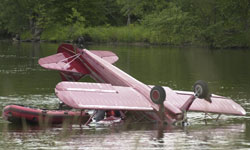
Mark Strub fought against panic as his Stearman sank, inverted, into a broad, slow-moving river. His hands groped for the pair of latches that could release him from his seatbelt harness. But the five-point harness pinned him firmly against the metal seat, where he was also bound to a 30-pound parachute.

Even though the cool water was less than six feet deep, Strub (pronounced stroob), an experienced scuba diver, was trapped, descending into darkness, and running out of time.“I’m going to drown,” he admitted to himself. “If I can’t get loose right now, I’m actually going to drown.”His thoughts also turned to his passenger, Kimberly Reed, whom he’d met less than an hour before. She was strapped into the biplane’s front seat, an arm’s reach away.Was she stuck in the waterlogged airplane, too?Strub finally unbuckled his harness and swam free from the upside-down airplane that remained partially submerged in the river. He lunged forward to the front cockpit to help his passenger. 

To his horror, he saw that the biplane’s top wing had struck a submerged rock. The wooden structure was smashed downward and aft, blocking access to—or escape from—the airplane’s front cockpit.A broad-shouldered, 180-pound carpenter, Strub, 45, recalled stories of people in emergencies being imbued with superhuman strength. But his frantic efforts couldn’t budge the saturated, 3,000-pound Stearman. He rushed to the river’s edge and ran to summon help. Then he sprinted back to the scene of the accident—a normally tranquil, idyllic branch of the Wisconsin River near the mill town of Wisconsin Rapids in the rural, central part of the state.Photo courtesy Wisconsin Rapids TribuneRescue workers followed him to the accident site, and they immediately noticed another danger. Strub’s low-flying airplane had clipped a cluster of power lines that supplied electricity to a nearby paper mill—and those wires were submerged in water. 

Anyone who stepped into the river was at risk of electrocution.With each passing moment, Strub realized any chance of saving Reed was slipping away.“That’s when I lost hope,” said Strub, a private pilot with about 500 flying hours. “There was no way she could still be alive.”Facts not in doubtThis year, Strub became the first U.S. pilot jailed for a domestic aircraft accident. He pleaded guilty to reduced charges of negligent operation of a motor vehicle and disorderly conduct and was sentenced to 30 days in jail, 150 days home confinement, fines, court costs, and two years probation during which he won’t be allowed to fly.He wears a pair of electronic monitoring bracelets, isn’t allowed to consume alcohol (even though alcohol played no role in his accident), and can only leave home to attend work.

 A divorced father of three girls, Strub also awaits a civil trial that could bankrupt him and lay claims to future earnings.He has been vilified as a criminal, and Reed’s grieving family has called him a murderer.His case fits an international pattern of criminalizing aviation accidents that dates back at least to 1992 when a French air traffic controller and several Airbus officials were charged in criminal court following an A320 crash in Strasbourg. In 1996, three SabreTech mechanics were charged for improperly loading oxygen canisters on a ValuJet DC-9 that caught fire and crashed in the Everglades. In 2000, two former Aerospatiale officials were charged with criminal counts related to the Concorde crash in Paris. A Swiss court convicted four air traffic managers following a 2002 midair collision between a DHL Boeing 757 and a Tupolev 154M, and two U.S. corporate pilots weren’t allowed to leave Brazil for two months in 2006 after a midair collision between their Embraer Legacy and a Boeing 737 over the Amazon. A Cape Air pilot was sent to jail for hiding a form of diabetes that would have disqualified him from airline flying.Aviation safety experts fear criminalizing aviation accidents will decrease air safety over the long term by clamping down on the free flow of information that could help avoid future mishaps.The facts surrounding Strub’s crash aren’t in doubt. 

Opinions vary, however, about whether his actions amounted to criminal conduct, or whether justice is served by sending him—or other general aviation pilots involved in aircraft accidents—to prison.Wood County District Attorney Todd Wolf, the Wisconsin official who pressed charges against Strub, declined to comment for this story. But he told a local newspaper he would have pursued the case whether the fatal accident had happened in a car, motor-cycle, or boat.“I have prosecuted (many) vehicle accidents resulting in death,” he said. “We see these cases in a lot of vehicles.”As perfect as he could make it Strub inherited his fascination with biplanes from his father, a master craftsman who built two of his own—a Hatz biplane and a SkyBolt.Strub established a successful carpentry business in the 1990s and earned a private pilot certificate in 2002.

 His first airplane was a Piper Colt, and then he bought a Luscombe to gain the tailwheel skills needed to fly biplanes, his real love.He bought a 1941 Super Stearman in 2001 while still in flight training and, in the next year, rejuvenated the fabric and repainted every inch of the 450-horsepower airplane. When he finished, the once-ragged workhorse had been transformed into a gleaming, red jewel.“I removed and sanded the wings and all the control surfaces,” he said. “I even polished all the stainless steel screws before I put them back on the airplane.

 I wanted everything to be as perfect as I could make it.”Strub got dual instruction in his Stearman from a former crop duster, and he learned to fly basic aerobatics in it, too.“I flew as much as I could—and by the summer of 2004 I had logged about 225 hours in the Stearman,” he said. “I was finally getting to the point where I felt like the airplane was part of me.I could feel what the airplane was doing, and I could anticipate what it was going to do next. It was a really great feeling.”Strub had a clean flying record with no accidents, FAR violations, or insurance claims before August 28, 2004, the date his flight ended so tragically a few miles from his home base at Alexander Field-South Wood County Airport.Strub says he intended to share his passion for flight that day by giving rides in his open-cockpit airplane. 

The weather was perfect, his Stearman was in top mechanical condition, and he believed his preflight planning and safety precautions were exemplary.Strub and his passenger both wore parachutes and, during the initial portion of their aerobatic flight, remained at relatively high altitudes—all in accordance with FAA regulations and prudence. Then, on the way back to the airport, Strub descended to treetop height and following the contours of the wide, curving Wisconsin River.FAR 91.119 places no limit on how low pilots are allowed to fly over sparsely populated areas or open water, as long as they stay at least 500 feet from any persons or vessels and can glide to a landing in case of engine failure without “undue hazard to persons or property on the surface.”An FAA investigator later cited Strub for “careless and reckless” flying, defining the river as a “congested area,” and said Strub violated minimum safe altitude rules that require pilots to fly at least 1,000 feet above or 2,000 feet horizontal distance from obstacles. Strub said he believed at the time of the accident he was flying over a portion of the river that was free of hazards.“I thought I was over a section of the river that I knew well,” he said. “But as it turns out, I was a mile and a half upriver from that point—and I was following a different branch.

 I’d never intentionally fly over any section of river that I didn’t already know.”We were underwaterStrub arrived at Alexander Field early on the day of his accident. The Children’s Miracle Network was hosting a balloon rally at the airport that day, and a large group of hot-air balloons lifted off shortly after dawn to take advantage of the clear skies, cool air, and light winds.Strub skipped breakfast and got off the ground alone in his Stearman in time to watch the balloon spectacle from above. When he landed, airport visitors started asking for airplane rides—and Strub was glad to oblige. As a private pilot, Strub said he knew he couldn’t charge for the rides. But one rider insisted that Strub take a token payment of $8—a fact that would come back to haunt him. He said he thought he could accept the money as pro rata cost sharing. The FAA later disagreed, however, and faulted Strub for failing to have a commercial pilot certificate, 100-hour aircraft mechanical inspections, a drug screening program, and other requirements for professional scenic flying operations.Kimberly Reed, 39, of Eau Claire, Michigan, came to the airport that morning with her husband, Kevin.

 The Reeds were on a family vacation with their children, and the couple inquired about a biplane ride for Kimberly.Strub had planned on parking his airplane for the day. But after giving several flights, he didn’t want to disappoint an eager passenger.“Aerobatic or straight and level?” he asked.Aerobatic.They strapped on parachutes, climbed to about 3,000 feet over the verdant countryside, and Strub performed a series of maneuvers: loop, roll, half-Cuban, and two hammerheads. That was enough for Reed who said she was beginning to feel queasy.Strub let Reed handle the controls for a few moments as they began a long descending left turn toward the water. Following the meandering Wisconsin River would be a thrilling substitute for aerobatics, Strub thought, and the river’s course would point them back toward Alexander Field.In his carpentry business, and charity work taking disabled kids for rides in horse-drawn sleighs, Strub said he strives always to “do a little extra” to exceed expectations. On this flight, a low-level river tour was the bonus.“We were chatting on the intercom as we descended,” Strub said. “Everything was going just fine.”A Stearman, even a big-engine model like Strub’s, typically travels at a relatively sedate 110 miles an hour in level flight. 

But the sensation of speed is magnified at lower altitudes—especially with ridges of towering pine trees nearby.Strub followed the clear, boulder-strewn river, and he was about to start a climb when he saw the wires. A cluster of them stretched across the water at exactly his height suspended from 70-foot-tall poles on both banks. He pulled back sharply on the stick—but too late.The sagging wires wrapped around the Stearman’s main landing gear, and Strub felt the powerful airplane decelerate as the wires stretched taut.The Stearman pulled so hard that it snapped some of the wooden poles, but the thick cords didn’t break. They clung to the airplane with a deadly grip.Strub kept pulling on the stick in a futile attempt to climb. Then the Stearman’s nose suddenly pitched downward. Looking ahead, he saw only the rushing river.“I remember looking straight down,” he said. “And then we were underwater.”Was she happy?Strub doesn’t have nightmares about the accident. The images haunt him in daylight.“I call them daymares,” he said, “and I don’t know what triggers them. I’ll be driving down a road or thinking about something else, and suddenly the entire scene pops into my head. I remember every detail. I relive it all the time. 

For the first four months afterward, I cried every day.”The FAA revoked Strub’s private pilot certificate five months after the accident and barred him from flying for one year. Months later, he was told he was the target of a criminal investigation. He hired a lawyer, and the lawyer said not to do anything until he was charged with a crime. Soon, Strub was charged with vehicular homicide, a felony that carries a maximum sentence of 10 years in prison.Strub returned to flying as a student pilot a little over a year after his certificate was revoked. He took the FAA knowledge test again and passed a second private pilot checkride. But flying had lost some of its magic.“I always thought of flying as the ultimate freedom,” he said. “When the wheels left the ground, I felt like I was leaving my troubles behind. But after the accident, every flight reminded me, in some way, of the accident.”Strub had been working on a commercial pilot certificate and planned to fly agricultural aircraft seasonally in North Dakota. But he dropped those plans. He also called Kevin Reed, Kimberly’s husband, on the phone weeks after the crash.“I just wanted to express my sadness and regret for everything that had happened,” Strub said. “It was hard, very hard. But I wanted to apologize, even though I knew my words were inadequate. Nothing I could say would bring Kimberly back. I also told him that I would answer any of his questions.“The one thing he wanted to know was whether Kimberly had been having fun in the moments before she died. Was she happy?”There’s a reasonAs Strub prepared for trial, he gained new confidence. To convict, a jury would have to find Strub had acted “with intent to cause damage,” or that injury or death “would probably result” from his actions. 

Strub believed he could show that the crash was purely accidental, and that he never would have flown low over the river if he thought he was putting his passenger, his airplane, or himself, in jeopardy.Then, at the last minute, the district attorney offered an alternative.Strub could plead guilty to two misdemeanors, negligent operation of a motor vehicle and disorderly conduct. He still faced the possibility of jail time—but the chance of a felony conviction and 10 years imprisonment would disappear.Strub’s lawyer was driving to the courthouse for the start of the trial and negotiating the terms of the plea on his cell phone at the same time. With mixed emotions, Strub took the deal.

A judge sentenced him to 30 days in the nearby Wood County Jail. And being in jail, surprisingly, wasn’t as terrible as Strub had imagined. He maintained his business on work release, and he even made friends with fellow inmates, most of whom were serving drunk-driving sentences.Strub still faces a civil trial that could impose lifelong financial penalties. But he said he’s looking forward to the future despite the uncertainty.“All they can take is everything I own,” he said stoically. “I’ll always have sadness and remorse. I was the pilot in command, and the accident was my fault. If I had flown the entire flight above 1,000 feet, none of this would have happened.”Strub said he’s endured some dark thoughts and brief periods in which he wished that his life had ended that day, too. But he’s received hundreds of cards and letters from fellow pilots and others, mostly strangers, who sympathize.One of the writers was a person Strub knew well—his third-grade teacher. 

She was a World War II-era air traffic controller, and she wrote to tell him of the burdens she and her colleagues carry from fatal mishaps that took place on their watch more than a half-century ago.Strub said he is bitter that the civil suit against him also names dozens of other people and organizations with little or no apparent connection to the accident. The Children’s Miracle Network is named in the suit as well as balloon rally organizers he says are blameless.Strub also thinks of Kimberly Reed, his passenger, and he wonders what she thinks of him. (He says it in the present tense.) According to a coroner’s report, Reed probably died immediately when the Stearman struck the wires. Strub clings to the hope that she didn’t suffer.“She seemed like a really kind person,” Strub said. “At some level, she must know that her death was an accident.

”The fact that he survived a crash that could so easily have ended his life also leads Strub to believe that he is alive for an as-yet unfulfilled purpose.

“There’s a reason I’m still here,” he says. “I don’t know what it is. But I’m absolutely sure there’s a reason.

By Dave Hirschman - AOPA

Thursday, May 29, 2008

Cebu Pacific bags tax incentive,other perks for fleet expansion

May 12, 2008 (The Manila Times - McClatchy-Tribune Information Services via COMTEX) -- -- CEBU Air Inc. has bagged tax incentives and other perks from the Board of Investments (BOI) for the company's plan to acquire brand new aircraft in the next two years.

In its application for fiscal incentives, the operator of Cebu Pacific said it will invest P5.52 billion for the acquisition of eight new ATR-72-500s and five new Airbus A320s.

Come September, the Gokongwei-owned airline will purchase the five Airbus A320s, and by December next year buy the ATR-72-500s.

Once the acquisition is completed, the 13 brand new aircraft will boost Cebu Pacific's international and domestic passenger traffic.

At present, Cebu Pacific has 14 A319s, all of which were bought using BOI-registered tax perks, as part of the airline's re-fleeting program. The carrier plans to position itself as the country's top domestic airline come 2011. Last year, it overtook rival Philippine Airlines as the country's leading domestic airline, having flown more people than the flag-carrier.

Read Full Article from TradingMarkets.Com

Cessna plane crashes at Lingayan

LINGAYEN -- A two-seater, single engine Cessna plane owned by Flight and Simulator Training (Fast), Inc. crash land at Lingayen airport Sunday morning. Nobody was reported injured. (Tuesday, May 13, 2008)

The pilot was identified as Nachikita Raval, 19, an Indian national. 

Mariano Trinidad of the Air Transportation Office (ATO) said they are waiting for the report of the ATO Safety Investigating Team (which was to arrive Monday afternoon) on the matter. 

It was at 10:25 a.m. Sunday when the Cessna plane (RP C-8204) approached runway 08 of Lingayen airport for Raval’s third and final pattern of her solo flight. 

It touched down on the spot of the threshold slightly to the runway 08 centerline, causing the aircraft to nose dive on the left side of the runway. 

The aircraft skidded for about 300 meters. It suffered damages on the right wing, landing gear, nose, engine and propeller. 

The hanger of Fast Flight is at the Manila Domestic Airport Complex General Aviation Area in Pasay City. 

Trinidad said about 20 light planes land everyday at Lingayen airport. 

The Lingayen airstrip was built in 1945 by the Americans during the liberation of Luzon. Its current runway measures 920 meters. 

One of the pet projects of Governor Amado Espino Jr. is the conversion of Lingayen airport into a domestic airport to boost the economic activities in Pangasinan Province. 

Read the Full Article ..

Gov't fast-tracks San Fernando Airport upgrade; PAL to fly starting August

The San Fernando Airport upgrade with an estimated cost of P500 million is being funded by the Bases Conversion Development Authority (BCDA).

The project is one of the major infrastructure projects committed by President Arroyo under her Super Regions development blueprint. It began on May 29, 2007 and is expected to be completed end of 2008.

The upgrading project entails the improvement of the landslide facilities including the expansion and extension of the present runway of 1,320 meters to 3,100 meters; airside facilities; air navigation systems and support facilities based on the requirements of the International Civil Aeronautics Organization.

The airport is presently classified as secondary airport, an alternative to the Loakan Airport in Baguio City. It could only accommodate turbo prop aircraft and the C-130 cargo plane of the Philippine Airforce. The upgrade is expected to turn the San Fernando Airport into a modern facility that complies with the international civil aviation standards to accommodate the international flights from the Asia-Pacific region.

Based on the report of Project Engineer Virgilio M. Salayog, the over-all physical accomplishment as of end April 2008, is 54.52 % as against the target of 54.13% or 0.39% ahead of schedule.

Earlier, the Thunderbird Resorts Inc., an international property developer who is operating a resort complex at the Poro Point Freeport Zone has contributed P55 million to the airport upgrade.

The rehabilitated San Fernando Airport will provide the infrastructure to propel tourism, commerce and trade especially in La Union and Baguio City.

Recently, the Philippine Airlines (PAL) expressed its interest of expanding its domestic operations service in San Fernando Airport starting August this year. This welcome development was relayed by Atty. Felix S. Racadio, President and CEO of PPMC, which operates and manages the San Fernando Airport.

Initially, PAL will fly thrice a week to and from Manila using Q300 and Q400 aircrafts, which can seat 56 and 74 passengers, respectively.

"PAL's decision to include San Fernando in its expansion program is a big boost to the ongoing efforts of transforming the Poro Point Freeport Zone into a world-class tourism and commercial destination", Racadio said. "In no time, Poro Point and the rest of La Union including the nearby provinces will be more accessible to the domestic and foreign tourism markets, he added.

Read the Full Article ...


Training aircraft to be built in Clark

CLARK FREEPORT -- An Italian defense contractor and a Filipino aviation firm here have signed an agreement for the manufacture of training aircraft. 

Alenia Aermacchi of Italy and Aerotech Industries Philippines, Inc. (Aipi) signed on April 25 an Assembly and Parts Manufacturing Agreement for 18 new SF 260 F basic trainer aircraft to be used by the Philippine Air Force (PAF). 

The 18 primary training aircraft will cost the government US$13.8 million. The amount includes the SF 260 F piston engines, pilot and technician training, technical assistance and the supply of ground support and spare parts. 

Teresa Parian, Aipi chief operating officer (COO), said the general agreement signed by the two firms "will definitely boost the aviation industry of the country." 

She noted that the general agreement is up to 2015 "which means that all orders that Alenia Aermacchi will receive in these next years worldwide will be assembled in and supplied out of the Aerotech Philippines facility." 

"Considering that 27 armed forces use SF 260 trainer aircraft all over the world, with about 1,000 units in operations, Alenia Aermacchi estimates 100 new units of this aircraft type to be sold in the next five years," Parian said. 

Alenia Aermacchi said delivery will start one year after the April 25, 2008 signing of the agreement and will be concluded within 18 months. 

Parian said Aipi, a registered locator based at the civil aviation complex of the Diosdado Macapagal International Airport (DMIA), has pioneered in the commercial support program of the PAF through its in-country major structural inspection of the S211 aircraft fleet. 

Also, Aipi has conducted maintenance and leasing of SF 260 M for the PAF's military pilot training for the past seven years and the inspection and services of Martin Baker ejection seats on S211 jets. 

Parian also said the firm provides representation and technical support to Singapore Technologies Aerospace Engineering's supply of 20 refurbished UH-IH helicopters and has aircraft spares inventory of about 5,000 line items. 


Sun Star Pampanga Article ..

BRIEFING - ASIA AVIATION - MAY 28, 2008

An executive briefing on aviation for May 28, 2008, prepared by Asia Pulse (http://www.asiapulse.com), the real-time, Asia-based wire with exclusive news, commercial intelligence and business opportunities.

  • INDONESIA'S MERPATI TO RETURN 7 AGEING AIRCRAFT TO LESSOR 
  • JAL EXPANDING HAND-CARRYING TO SPEED BUSINESS PACKAGE DELIVERY 
  • DEPARTING AUSTRALIA TO COST A$9 MORE UNDER PROPOSED BILL 
  • ABU DHABI AMONG THE REGION'S TOP AVIATION INVESTORS: SURVEY 
  • INDIAN IT PROVIDER JOINS AI-SATS FOR CARGO HANDLING SYSTEMS 
  • UPS TO MOVE ASIAN AIR TRANSIT HUB TO CHINA'S SHENZHEN AIRPORT 
  • MOST AUSTRALIAN BUSINESS TRAVELLERS GO ECONOMY CLASS: POLL 

Read the Full Briefing from TradingMarkets.Com

No closure yet to Naia-3 case (Manila Airport)

About six years ago, the nation was agog over the opening of the Ninoy Aquino International Airport Terminal-3 in Pasay City. The private contractor, Philippine International Air Terminals Co., announced in November 2002 that the “world class, state-of-the-art” airport was about 95 percent complete and was ready for a soft opening in a few weeks’ time.

But the opening of Naia-3 was repeatedly postponed after the Piatco contract was reviewed by Malacañang and alleged infirmities and terms disadvantageous to the government were uncovered. The bulk of the construction cost for the aviation terminal was found to have been shouldered by German firm Fraport in alleged violation of the anti-dummy law. Subsequently, the Arroyo administration declared the contract null and void and took over the facility in 2004. The Supreme Court in 2005 upheld the government’s drastic action but ordered it to grant just and fair compensation to Piatco.

Today, the Naia-3, which Piatco claimed was built at a cost of more than $600 million, remains mothballed. Whenever motorists pass through the Villamor Air Base and catch a glimpse of this imposing white elephant, they can only shake their heads in frustration. Why has such an expensive facility stayed idle for an inordinately long time, when the country is badly in need of bigger and modern airports to cope with the ever-increasing volume of air travelers?

The fiasco over the terminal is perhaps the biggest failure of the Arroyo administration in the sphere of infrastructure, setting back the growth of tourism and investments, and giving our country a black eye before the international community.

Read the Full Article from the Manila Standard Today

Incident: Philippine Airlines A343 at Vancouver on May 25th 2008, rejected takeoff

A Philippine Airlines Airbus A340-300, registration RP-C3430 performing flight PR107 from Vancouver,BC (Canada) to Manila (Philippines), rejected takeoff on runway 26L. Blue smoke was seen coming off one of the port engines. 

The aircraft taxied off the runway on its own power, the flight had to be cancelled. The aircraft is still seen at Vancouver airport awaiting repair.

Posted Wednesday, May 28th 2008 09:42Z

Full Article from
Aviation Herald

Tuesday, May 27, 2008

Covert, secret missions along the ‘Ho Chi Minh Trail’


Another interesting article about aviation during the Vietnam War. Worth a read ...

For 30 years, Michael P. Smith Jr. could say nothing about his service while based in Thailand during the Vietnam War. It is a story about a group of men who worked covertly on missions that saved the lives of many of their fellow servicemen. 

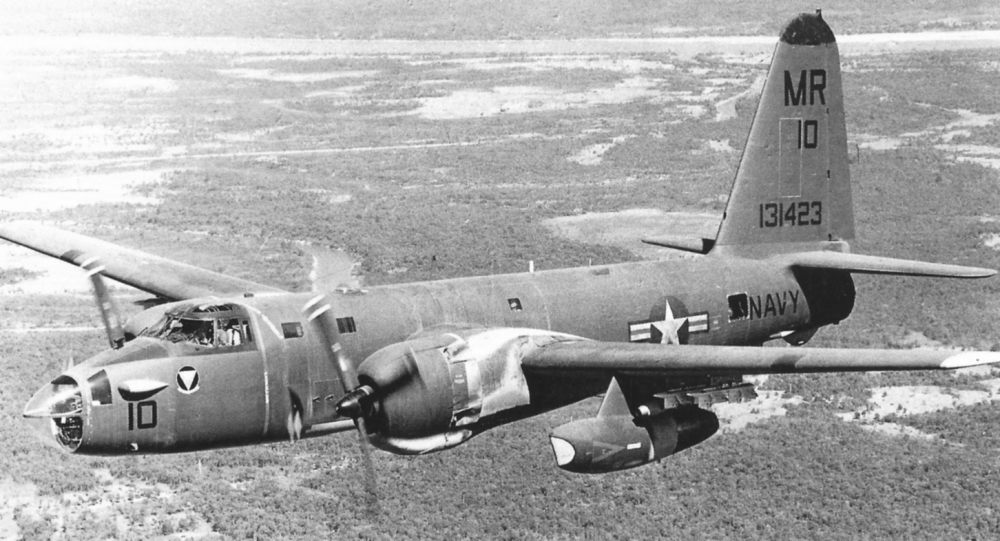
While not the official designation, the squadron is nicknamed the “Ghost Squadron.” Its official designation was Observation Squadron 67, or VO-67, though observation had basically nothing to do with why the squadron was created and deployed in 1967. The real mission of the squadron members was so secret that not even the personnel at the Nakhon Phanom Royal Thai Air Base in Thailand knew why they were there.

The mission was declassified in 1998, 30 years after the squadron was disbanded, and about two weeks ago the squadron received a Presidential Unit Citation during a ceremony at the U.S. Navy Memorial in Washington, D.C.

“The trail was regarded as one of the most heavily defended areas in the Vietnam War. Many 37 and 57mm radar controlled AAA guns and small arms awaited the slow lumbering OP-2E Neptunes as they made there long straight line run in to implant the coded sensors. The squadron would eventually implant several thousand ‘Acoubuoys’ (electronic listening devices) along the trail. At times approaching the target area at 50 feet above the terrain then popping up to 500 feet just before the target, implant sensors, and then a max-power jinking clime out. VO-67 was also the only aircraft squadron, of any service, to use the famous Norden Bombsight during the Vietnam War. The sight was used to implant the ‘Adsid’ sensor, Air Delivered Seismic Detection Sensor, at altitudes of 2,000 to 3,000 feet. 

Read the Full Story ..

For more information on the Squadron, check out its WebSite ..

PGMA to lead inauguration of Poro Point Tourism Complex


President Gloria Macapagal-Arroyo leads today's (27 May 2008 – Tuesday) inauguration rites for a luxury hotel and a world-class nine-hole golf course here meant to put San Fernando City, La Union at the world map of major tourist and recreation destinations.

The President is expected to arrive at the Poro Point Freeport Zone in the morning and will be accompanied by members of her official family, notably Tourism Secretary Ace Durano, and Trade and Industry Secretary Peter Favila.

On hand to welcome Mrs. Arroyo are Bases Conversion and Development Authority (BCDA) Chairman Aloysius Santos, BCDA President and CEO Narciso Abaya, Thunderbird Resorts Inc. Chief Executive Officer for Philippine Operations Raul Sueiro, La Union Gov. Manuel Ortega, Rep. Victor Ortega, San Fernando Mayor Pablo Ortega, and the BCDA and Poro Point Management Corporation (PPMC) Board of Directors.

The Poro Point Freeport Zone is under the stewardship of the BCDA through its subsidiary, PPMC.President Arroyo is expected to lead in the unveiling of the Thunderbird Resort-Poro Point Hotel and Golf Course marker.Thunderbird has leased some 65.5 hectares of land in the Poro Point Freeport Zone that it is developing into a leisure resort, sports, entertainment and tourism complex.Thunderbird has so far infused some P700 million in the development of the Poro Point over the past three years. 

Thunderbird has committed to invest $100 million over a 25-year period. It has also contributed P55 million for the upgrade of the San Fernando Airport to enable it to accommodate larger aircraft like Airbus 320 and Boeing 737. The expansion project is slated for completion by year-end.Underscoring the significance of a fully developed Poro Point Special Economic and Freeport Zone, Abaya said that with the tourism infrastructures in place, Poro Point will attract both local and foreign tourists. "Increased tourist spending will augur well for the economy of La Union," Abaya said.

Prior to the completion of the hotel and golf course in Poro Point, Thunderbird already operates a 75-seat fine dining restaurant and entertainment complex.With Thunderbird's all-out pursuit of its program to develop Poro Point into an "ideal tourist destination," complemented by BCDA's upgrading of the San Fernando Airport to ensure easier access to Poro Point, trade and commerce in San Fernando and its neighboring areas are likely to increase significantly.Among the major benefits of Thunderbird's investment in Poro Point is the increased number of permanent, full-time job opportunities to the people of La Union.

Thunderbird is committed to source at least 85 percent of its workforce from San Fernando City and the Province of La Union.Thunderbird Director for Marketing Cheryl Arnold said, the resort features 36 well-appointed luxury suites. Each of the hotel's 45-square meter suite comes with exclusive amenities such as double-sized beds, a walk-in closet, a bathroom with separate shower and hot tub, hi-speed wireless internet, iPod with docking station & surround sound system, coffee and tea maker, in-room electronic safe, and a balcony that offers breathtaking view of the South China.

The Cliffs Golf Course, on the other hand, is a nine-hole, par 72 all-weather championship golf course, designed by the International Management Group (IMG) and maintained by Sta. Elena Properties, Inc.The golf course features a unique ocean hole that is undoubtedly one of the best Par 3 holes in Asia. Playing from a variety of lengths, this medium to short Par 3 will require precise club selection as the golf ball might end up flying over the cliff and landing on the sea.

See Thunderbirds WebSite for more information on what they are up to ..

Poro Point Freeport Zone (27 May) 

ASEAN nations to sign MOU on Cooperation to Aircraft Accident and Incident Investigation


The 10-member nations of the Association of Southeast Asian Nations (ASEAN) is expected to sign a Memorandum of Understanding (MOU) on Cooperation to Aircraft Accident and Incident Investigation on Thursday, the last day of the three-day 25th ASEAN Senior Transport Officials Meeting (STOM) that kicks off today at the Shangri-la Mactan Resort and Spa in Lapulapu City, Cebu.

Under the MOU, the participating ASEAN member countries will cooperate in aircraft accident and incident investigation, investigation training and sharing of information and expertise, consistent with the standards and recommended practices, aircraft accident and incident investigation, contained in the Chicago Convention.

The MOU will be signed by authorities responsible for the investigation of aircraft accident and incident investigations of each of the ASEAN member nations which, aims to enhance the capabilities and professionalism of their respective aircraft investigators, and strengthen, promote and develop cooperation to enhance aviation safety.

Member states of ASEAN are Indonesia, Malaysia, Philippines, Brunei Darussalam, Singapore, Thailand, Lao PDR, Myanmar, Vietnam and Cambodia.
ASEAN was first established in Bangkok, Thailand on August 8, 1967 by the five original member-countries namely Indonesia, Malaysia, Philippines, Singapore and Thailand. Brunei Darussalam joined on January 8, 1984, Vietnam on July 28 1995, Lao PDR and Myanmar on July 23, 1997 and Cambodia on April 30, 1999

Cebu City (27 May) --

Monday, May 26, 2008

Weeks was a pilot in the Central Intelligence Agency flying the super-secret A-12


Whilst not directly related to the Philippines, this is worth a read ..

Weeks was a pilot in the Central Intelligence Agency flying the super-secret A-12 high-level surveillance aircraft from 1963 until his death in 1968. A couple of weeks before his death, he became the pilot who located the USS Pueblo, the American intelligence-gathering ship, after it was captured by North Korean patrol boats. The incident pushed the U.S. dangerously close to a confrontation with the communist country.

Read the full story ...

Gatchalian eyes new airline


The following article appeared in the Manila Standard Times today.

Plastics king William Gatchalian wants to go back to the airline business two decades after he sold Air Philippines to taipan Lucio Tan, who also owns Philippine Airlines.

Read the entire article ...

More information on Mr. Gatchalian is here ...

Friday, May 23, 2008

Asean open skies - Is it Real?


The Manila Times International published an Editorial and Opinion today about the Asean Open Skies Policy due to be signed in December. The Philippines has agreed to sign it along with China, Japan, India, and South Korea as well as the nine other Asean Countries.

In essence, the open skies is supposed to allow airlines freedom of movement amongst the countries, unlimited and unrestricted maintenance or technical stops but they cannot disembark passengers en-route.  (This protects the domestic markets of the signatory countries)

Airlines of the signatory countries can basically fly point to point to any other destination in another signatory country, subject to the provisions mentioned in the previous paragraph

GMA (our president) has apparently stated that DMIA (Clark International Airport) will be the focus for this movement in the philippines.

Lets see what happens


Thursday, May 22, 2008

Central Luzon officials, traders push for Open Skies at Clark

CLARK FREEPORT -- Officials and traders in Central Luzon have joined hands in asking President Gloria Macapagal-Arroyo to issue Executive Order 500-B, which will allow unlimited flights at the Diosdado Macapagal International Airport (DMIA). 

A group of local officials and businessmen issued a manifesto on Wednesday urging the President to fast-track the passage of EO 500-B that will allow more international flights at the 2,500 hectare Civil Aviation Complex. 

"We appeal to our President to issue EO 500-B so that our country can enjoy the fruits of a liberalized air policy that will create more employment and economic developments not only in Clark and Subic but as well the entire country," said Pampanga first district Representative Carmelo Lazatin. 

Lazatin vowed that he would seek an audience with President Arroyo this week and present to her their manifesto seeking to restore the passage of EO 500B, which is expected to save the airline industry in the Philippines. 

The manifesto was unanimously signed by major stakeholders of Central Luzon headed by Lazatin who are lobbying for the passage of EO 500B. 

Other signatories include Mario Lazatin, director of the Metro Angeles Chambers of Commerce and Industry; Carmen Mctavish, chairperson of the Greater Clark Visitors' Bureau; Jeanie Del Rosario, president of the Clark Investors and Locators Association (Cila); Frankie Villanueva, president of the Association of Business Chambers in Central Luzon; James Dale, president of the Hotel and Restaurants Association of Pampanga; Freddie So, president of the Angeles City Filipino Chinese Chamber of Commerce and Industry Incorporated; and Mabalacat Mayor Marino Morales. 

In their manifesto, the group wants the President to schedule air talks so as to attract foreign air carriers to operate in the country. 

The stakeholders stated that this would benefit the partners in tourism, trade and overseas employment nd the acceptance of proposals by other countries for liberal air access including pocket open skies in Clark and Subic, which will guarantee a long-term growth in the aerotropolis. 

The manifesto also said the liberalization of the Philippine Aviation Industry through the passage of a law on developing all gateways outside Manila through pocket open skies. 

"The holding of more bilateral and multilateral air talks with other countries is also a critical element in securing more favorable and more relevant Air Service Agreements with our trade and tourism partners for the benefit of all Philippine gateways," the manifesto stated. 

DOTC and CAB approval 

"EO 500B endorsed by the Clark International Airport Corporation (Ciac) has undergone the process required by the Office of the President including the review and approval by the Department of Transportation and Communications (DOTC) through the Civil Aeronautics Board (CAB) prior to its submission to President Arroyo," the group said. 

Lazatin also criticized efforts by other local air carriers in stopping the passage of EO 500B saying: "they only protect their own interest and not the interest of the Filipino people." 

He was referring to the nation's flag carrier Philippine Airlines (PAL), which has been opposing an open skies policy for Clark and Subic. 

Lazatin noted that DMIA in Clark Freeport has been experiencing a growth of passenger flights since 2003. But when Malacañang issued EO 500A in August 2006, flights at DMIA have decreased tremendously. 

This, the lawmaker, is hampering the development of the airport and its surrounding communities. "EO 500B is the best alternative to save our airline industry," he said. 

The President recently declared DMIA as the premier gateway of the country. 

Among the carriers operating at DMIA are TigerAirways of Singapore, Air Asia of Malaysia, Asiana Airlines of Korea, China Southen Airlines and Deer Air of China, Southeast Asian Airlines (Seair), Asian Spirit and Cebu Pacific. 

Airport developers like the Changi Airports International of Singapore and the Al Kharafi Group of Kuwait have shown interest in DMIA. 

President Arroyo recently led the inauguration of the Expanded Terminal of DMIA, which costs P112 million. It is expected to increase its passenger capacity to two million passengers annually. 

Ciac, the operating arm of DMIA, also plans to embark in an ambitious project, the development of the Terminal 2. 

The new terminal would increase passenger capacity to seven million to eight million annually

Sun Star Pampanga
Saturday, May 17, 2008
By Reynaldo G. Navales

Philippines Canada sign air rights deal

MANILA, Philippines--Clark International Airport Corp. (CIAC) scored a victory for the Diosdado Macapagal International Airport (DMIA) by obtaining an agreement for unlimited all-cargo flights between Clark and Canada, with fifth freedom rights thrown in."(It is) very positive for Clark.
Canada recognized the thrust of DMIA as a logistics hub so it is going to grant liberal all-cargo rights between Clark and Canada with fifth freedom rights," CIAC president Victor Jose Luciano told the Philippine Daily Inquirer in a text message shortly after the completion of the RP-Canada cargo air talks in Vancouver during the weekend.

Under an agreement signed at the meeting, the two countries will allow at least one flight daily with no capacity limit.As much as 200 tons of cargo can be flown daily by the airlines of both countries. They can also lift and deliver cargo coming from a third country, under fifth freedom rights.
CIAC has long anticipated cargo growth in Clark, which is being positioned as a logistics hub. Clark's DMIA is preparing to develop an P8-billion new complex in anticipation of a boom in both cargo and passenger volumes.The proposed area for Terminal 2 would have ancillary facilities, including a ramp, parking, express and general freight facilities and heavy aircraft maintenance area.

There should also be a cargo terminal, especially in anticipation of the entry of large aircraft. Terminal 2 will have the tubes and air bridges for that, and the cargo terminal beside it will take care of the cargo.Clark's agreement with Canada adds momentum to the government's thrust to draw more cargo traffic through the Philippines to spur more business for airlines, multi-modal logistics providers, small cargo players and allied businesses such as aircraft repair.

In April 2008, Singapore Airlines Engineering Co. (SIAEC), part of the Singapore Airlines Group that provides maintenance services to Singapore's Changi Airport, said it was planning to infuse $100 million into a project involving the setting up of a world-class aircraft repair facility at the DMIA complex.

The Philippines is also gearing for Asia-wide cargo liberalization.The government nominated PAL and Pacific East Asia Cargo Airlines as the country's official carriers under an Association of Southeast Asian Nations (Asean) memorandum of agreement for liberalized airfreight services.
The Civil Aviation Board (CAB) said in May 2007 that the memorandum allowed designated airlines of each Asean member to operate all-cargo services up to 100 tons weekly with no limitation on frequency and aircraft type

By Riza T. Olchondra
Philippine Daily Inquirer
First Posted 18:21:00 05/18/2008

UPS to move Asian hub from Philippines to China

US freight and logistics firm United Parcel Service (UPS) said Wednesday it is relocating its Asian hub from the Philippines to China in the next three years.

Andy Connelly, UPS senior vice president for South Asia Pacific, said the new intra-Asia hub in Shenzhen, China will be operational by 2010.

The new facility, with a total land area of 89,000 sq mts, will launch 100 flights per week and employ 400 people. It has the capacity to process 18,000 packages an hour, Connelly said.

'In the past few years, the increase in trend was moving towards north of Asia,' he said. 'About 75 percent of the intra-Asia package volume shift to North Asia, and the decision was made to handle the packages close to our clients.'

Connelly noted that China, Hong Kong, Japan, South Korea and Taiwan now account for more than half of UPS' total intra-Asia volume.

'Given the growth in shipping in southern China, it makes sense to sort and dispatch this volume from a hub closer to our customers,' he said.

Connelly said UPS will retain its operations in the Clark industrial zone in the northern Philippines, but on a scaled-down level.

In the next three years, UPS will downsize the number of employees in Clark to 70 from the current 200. Flights will also be reduced to two a day from the current nine. 

Wednesday 21st May, 2008
IANS     Wednesday 21st May, 2008   

Tuesday, May 20, 2008

CAAP Draft CAR's Summary of Parts 1, 2 8, 11


I have spent the last few hours going through the Draft CARS Parts 1, 2, 8 and 11 and have listed below items that I feel are relevant to the General Aviation Community. Please feel free to comment on your own interpretations or email me and I will add your comments to this discussion.

As I see it, the single biggest benefit so far is the removal of the old aircraft type rating on each aircraft type. I can see lots of issues on how it works in practice, but likely, the proficiency check would take place on the highest horse power as it does now. Open to comments!!!! I cannot see where this is specifically stated.

=================================================

Part 1 - General Policies, Procedures and Definitions

Generally Quite straight forward 
Pilots must possess License and medical when in command of an aircraft.
CAAP and Police hae the right to demand the license be produced
Civel and Criminal penalalties can apply as prescribed by the Civel Aviation Act
There is a copmplete list of sanctions/penalties listed for offenses (Some still not 

finalized)

Part 2 - Personnel Licensing

Licenses issued will be: PPL, CPL, MPL, ATPL, Glider, Balloon
Category Ratings on a License may be: Airplane, Helicopter, Glider, Balloon
Class Rating on a Airplane License will be: Single Engine Land, Single Engine Sea, Multi 
Engine Land, Multi Engine Sea, High Performance Airplane
Type Rating Issued for: Each type of aircrfat certified for min two crew operation, each 
type of helicopter, any aircraft considered necessary by the authority
Instrument Ratings: Airplane, Helicopter

Instructor Ratings: Flight, specialist Class/Type/Instrument ratings
Authorizations: Studen Pilot, Examiner, Cat II Pilot, Cat III Pilot, Inspection

Validity:

Log Book is primary source for csatisfying competency requirements
Validity of Licenses is two years

Validation of Foreign Licenses
Based upon validity of foreign license
Must complete a Skills Test for each rating requested
Must have a current medical
Must demonstrate knowledge of Air Law, Human Performance Weather COdes, Flight performance 

and Planning
Speak English
Several Options available - Conversion based on Foreign License, Recipricla Grreement 
between two states, and some more complicate ones
Foreign Medicals ccan be validated
Experience requirements may be reduced if Training is conducted by an approved training 
organization

If you are 60 and operating commercial air transportation, then no more license. However, if 
in a multi-crew envirinment, then you can operate until 65
Private Operation age limitations are not specified

RECENCY REQUIREMENTS

3 take offs and landings in last 90 days
At Night, if no instrument rating, 3 takes offs and landings in last 90 days (Does this mean 
Night VFR is OK???)

RATINGS

Class Rating validity is 1 year for Multi Engine and 2 years for single engine
Single Engine Class Rating Renewal - 12 hours in last 12 months. Complete a Profeciency 
Check in last 24 months
Multi Engine Class Rating Renewal - 10 route sectors withinlast 3 months, profeciency check 
within last 12 months

Type Ratings - 100 hours PIC in aircrfat Category, Instrument Rating if necessary, CRM 
Course, ATPL Knowledge
Single and Multis require Flight Instruction, Instrument Procedures if applicable
All ratings require a Skills Test
Type Ratings are valid for one year
Renewal as per Class Rating, Multi Engine
(This all applies applies to multi engine only as per Ratings section above me thinks)
cat II and III - apply to airlin operation.

LICENSES

Student Pilots
PPL - requires instructor to endorse that student is ready for Knowledge Tests (Looks like 
no more school !!!) 40 hours flight time, 5 of which may be in a Simulator. Valid for two 
years.
CPL - Received and Logged Ground Training from an Authorized Instructer, pass the knowledge 
test, 200 hours or 150 hours if approved training organization, if use dat night, 5 hours 
night, 25 hours dual instruction s opart of 200 hours, can include 5 hours in sim), Class 1 

Medical, Valid for One Year
ATPL - Lots of stuff in here
MPL - Lots of stuff in here

Instrument Rating - Ground Training from an Authorized Instructor, 40 hours total, 10 hours 
in the air, 30 hours sim, Pass a Skills Test, Special Medical Reuirement to pass a hearing 
Test for PPL Medical Holders, pass a knowledge test. (There is a comment about 20 hours 
Ground Time instaed of teh 30 hours sim time, not sure what it means). Valid for one year. 
renewal requires profeciency check.

PPL Helicopter - General teh same as PPl with a few Heklicopter provisions
CPL Helicopter - generally same as CPl with some specific Helicopter provisions
ATPL Helicopter - generally the same as ATPL with some specific helicopter provisions
IR helicopter - generally the same as Ir except for some specific helicopter provisions

INSTRUCTOR RATINGS
Knowledge to CPL Standard, Ground Training from an Authorized Instructor, Pass KNowledge 
Test, min 200 hours single pilot experience, in flight instruction by an acceptable 
instructor, pass skills test
Instructor can issue Train for PPL initially, require 500 hours, plus 200 hours 
instructional time for CPL training
Single Engine CLass Rating Training requires 15 hours in same Class and applicable type in 
last 12 months
Multi Engine Class Rating Training requires 500 hours total flight tiome. 15 hours on same 

type in last 12 months
Flight Instructor Training requires 500 hours of instruction in same Category
Instrument Rating Instruction requires 200 hours actual IFR and passed knowledge test
Synthetic Flight Trainer Instruction requires min 2 yearsexperience in Synthetic Flight 

Trainers. Authorization is validd for two years
Flight Instructor Rating renewals require min of 30 hours logged instructional flight time  
in last two years in last 12 months plus profeciency check

EXMAINERS RATING/LICENSE

Must hold licenses and ratings for which they are  examining
A minimum of 1000 flight time plus a minimum 200 hours of flight instructional time
Pass a Skills Test by an inspector of the Authority

GLIDER PILOTS LICENSE

Requires Ground Training on Knowledge and pass the knowledge test
6 hours of flight time, including 20 launches (and hopefully landings) and including 2 hours 
of solo time
(I think it requires a skills test but it is not specifically stated)
If you have a PPL, 3 hours can be credited
Class 2 Medical Required
Valid for 2 years

FREE BALLOON LICENSE

Requires Ground Training on Knowledge and pass the knowledge test
16 hours flight time, including 8 launches and ascents of which one must be solo
Pass a Skills test
Class 2 Medical Required
Valid for 2 years


PART 8 - Operations

(I have only noted points that MAY be different from the existing regs or of specific 
interest)

LSA (Light SPort Aircraft) is included in the definitions section
Progressive Maintenenance Inspections are allowed for aircraft less than 5700Kg MTOW
Authorization in lieu of Type Rating for 60 days for ferry flights, test flights, training 
to get a type rating, skill test to get a type rating. Can be extended for additional 60 
days
Foreign Registered aircrfat must be operated on license belonging to foreign register (Not 
new, but clearly stated now)
3 take offs and landings in last 90 days, including night. If tail wheel, must be full 
stops, not touch and goes.
If not current, a recurrency training is required. (Make sure you fly every 90 days)
IFR Currency - 6 hours in last 6 months, 3 on type of aircraft or profeciency check doen 
recently. 6 Instrument Approaches. Profeciency Check is good for 6 months currency.

Flight Plans - It appears that Flight Plans are only required for flights in COntrolled 
airspace or if it requires ATS during any part of the flight. Authority can nominate routes 
where flight plans are required irregardless.

Night VFR - 8.8.1.6 states minimas for Night VFR (Hooray) (However, have ssen no rating for 
it anywhere yet)

Formation FLights are allowed if all PIC's are involved. In controlled airspace, it is 
allowed subject to some sensible requirements in terms of aircraft maximum seperation and 
Flight Leader Responsibilities. No Passengers allowed ot be carried for Hire.


Specifies right of Way Rules for Water Operations

Simulated Instrument Flight is allowed ina Dual COntrol aircraft with a Safety Pilot, who 
can hold a PPL, rated in same aircraft and current

Aerobatic Flight is allowed except fo rteh following conditions: Below an Altitude of 1500 
feet, Visibility less than 3 miles, Not in Class B, C, D, E Airspace, over a town, over a 
group of people. Waivers may be applied for. Parachutes must be worn if bank Angles exceed 
60 degrees

VFR Crusiing Altitudes apply above 3000 feet

Special VFR is allowed, pilot must be instrument rated as must the aircraft.

Night VFR; Ok here it is: No Person may operate a VFR FLight between sunset and sunrise 
unless authorized by teh appropriate ATC Authority and operating in accordance with any 
conditions prescribed by the authority (Oh well, we did have hope for a while ... )


Single Pilot Ifr Day or night is allowed if 9 pax seats or less, flight manual allows single 
pilot ifr, must be propellor driven, MTOW less than 5700Kg, equipeed appropriately, pic is 
current ifr. Turbines are alowed if a trend Momnitoring system is in place.

Single Pilot IFR Day or Night require minimum of 50 hours on aircraft type. min of 10 pic.25 
hours of which must be ifr as well. In last 90 days, 5 Ifr flights, including 3 instrument 
approaches. AIrcraft must have undergone an Instrument Approach check in last 90 days

PART 11

Of specific interest is teh permitting of Glider Towing and teh recognition of Sport Aircraft Category. 
As I can see it, th Sport Aircraft Category is pretty much as it stands now. It is in a section called Non-Type 
Certificated Aircraft; Operating Limitations
There appears to be no mention of exoperimental, however the term Home Built is used.